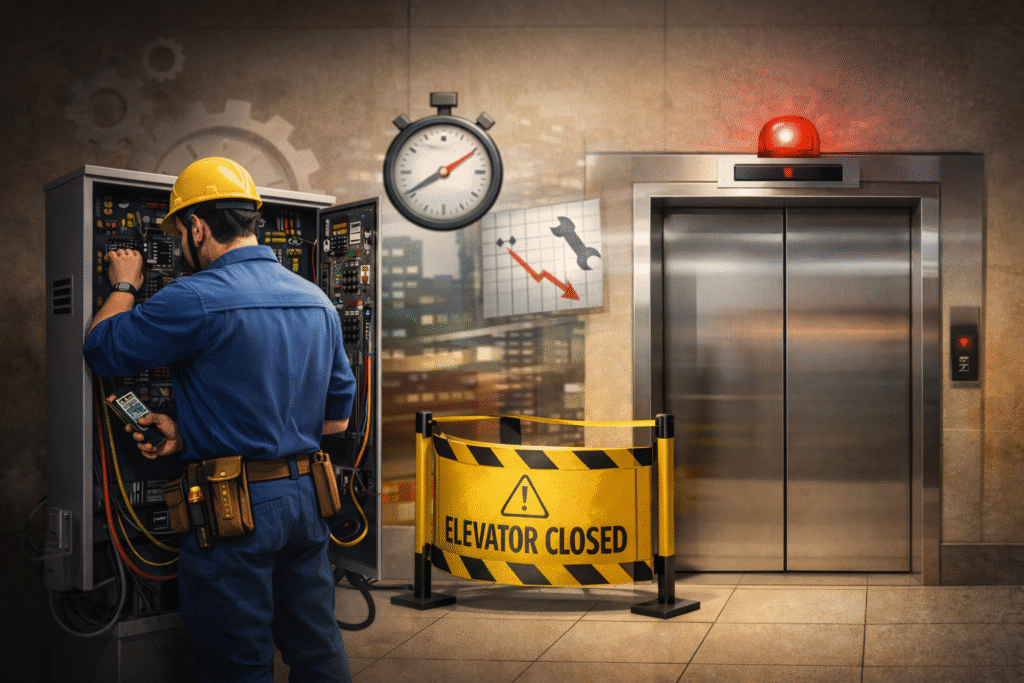
California Elevator Code Compliance | Los Angeles
In Los Angeles, elevator inspections are not routine formalities—they’re serious regulatory events.
California maintains one of the strictest elevator oversight environments in the country. For LA property owners and managers, California elevator code compliance requires disciplined documentation, proactive maintenance tracking, and a clear understanding of inspection risk.
Miss something, and you may face citations, operational restrictions, or even shutdowns.
Here’s what you need to track—and why it matters.
1. Annual Inspections & Operating Certificates
All elevators in California must be inspected and certified under the oversight of the
California Division of Occupational Safety and Health (Cal/OSHA) Elevator Unit.
Key requirements include:
- Annual state inspection
- Valid operating certificate displayed
- Correction of cited deficiencies within mandated timeframes
- Payment of required state fees
In Los Angeles, inspection scheduling delays can occur due to volume. That makes pre-inspection readiness critical.
2. Maintenance Control Program (MCP) Documentation
California requires a documented Maintenance Control Program (MCP) for each elevator.
This is not optional—and it is frequently reviewed during inspections.
Your MCP must include:
- Equipment specifications
- Maintenance procedures
- Testing schedules
- Code references
- Records of completed work
- Component replacement logs
If documentation is incomplete or inconsistent, inspectors may issue citations—even if the equipment appears functional.
3. Fire Service & Emergency Operation Requirements
In Los Angeles high-rises and commercial properties, fire service compliance is heavily scrutinized.
Property owners must ensure:
- Proper Phase I recall functionality
- Phase II in-car operation
- Updated signage
- Functional firefighter communication systems
- Code-compliant emergency power sequencing (where required)
These are life-safety systems. Failures here are taken seriously.
4. Door Protection & Passenger Safety Systems
Door-related violations are among the most common inspection findings.
Inspectors evaluate:
- Door reopening devices
- Closing force limits
- Leveling accuracy
- Door restrictors
- Photo eyes and safety edges
In high-traffic LA properties—medical offices, residential towers, retail centers—door systems endure constant wear. Small alignment issues can quickly become compliance citations.
5. Five-Year Full Load Testing
California requires periodic full-load safety testing under state supervision.
These tests evaluate:
- Brake performance
- Governor systems
- Safety mechanisms
- Emergency stopping functions
Failure to schedule or properly document these tests can result in serious penalties.
Tracking deadlines well in advance prevents last-minute scrambling.
6. Correction Timelines & Reinspection Risk
When citations are issued, correction windows are limited.
If violations are not resolved promptly:
- Reinspection fees apply
- Fines may escalate
- Elevators may be red-tagged
- Tenants may lose access
In Los Angeles’ competitive commercial market, downtime caused by compliance failures can damage tenant relationships and reputation.
7. Local Jurisdiction Nuances
While oversight is statewide, Los Angeles properties may also encounter additional coordination requirements related to:
- High-rise classifications
- Seismic considerations
- Municipal permitting processes
- Major alteration approvals
California’s seismic standards are particularly important when modernization work is performed. Certain upgrades may trigger additional compliance obligations.
Planning ahead matters.
The Most Common Compliance Mistake: Reactive Management
Many compliance issues occur because documentation, maintenance, and inspection preparation are handled reactively.
A structured compliance strategy includes:
✔ Annual inspection tracking
✔ Five-year test scheduling calendar
✔ MCP documentation audits
✔ Pre-inspection internal reviews
✔ Deficiency trend analysis
✔ Modernization planning aligned with code updates
Compliance is not a once-a-year event—it’s an ongoing management discipline.
Why LA Property Owners Must Stay Proactive
Los Angeles properties experience:
- High passenger volume
- Strict regulatory oversight
- Dense urban service demand
- Increased tenant expectations
An elevator shutdown in LA isn’t just inconvenient—it’s disruptive, public, and potentially expensive.
Proactive code compliance protects:
- Operating certificates
- Tenant relationships
- Budget stability
- Building reputation
The Bottom Line
California elevator code compliance requires structure, documentation, and forward planning.
If you manage property in Los Angeles, you should always know:
- When your next inspection is scheduled
- When your five-year test is due
- Whether your MCP is current
- Which recurring issues could trigger citations
- Where modernization may reduce compliance risk
Waiting for an inspector to identify problems is not a strategy.
Request a Compliance Readiness Review
Let’s evaluate your documentation, testing schedule, and inspection exposure before your next state visit.
Request a Compliance Readiness Review today and ensure your Los Angeles property stays inspection-ready.